Geography Ambassadors
A Geography Ambassador acts as a pupil representative and champion for their subject. Their role is to help promote enthusiasm for geography across the school, support staff in developing geographical learning, and give pupils a voice in shaping how geography is taught.
Role Description - Main Responsibilities
Promote a Love for Geography:
- Encourage other pupils to take an interest in learning about the world around them.
- Share fun geography facts, maps, or news about different countries in assemblies, newsletters, or on display boards.
Support Learning Across the School:
- Help teachers with geography-themed events, such as Earth Day, World Environment Day, or Eco Week.
- Take part in leading or assisting with geography-related trips, such as visits to local rivers, farms, or environmental centres.
Assist with Geography or Eco Clubs:
- Support teachers in running geography or eco clubs by helping set up activities, encouraging other pupils to join in, and suggesting exciting topics (e.g., volcanoes, weather, countries of the world).
- Help promote the club and gather feedback on what pupils enjoy learning about.
Represent Pupil Voice:
- Gather feedback from classmates about what they enjoy in geography lessons and how learning could be improved.
- Attend regular meetings with the geography subject lead or school council to share ideas and discuss how to make geography learning even better.
Help with Displays and Resources:
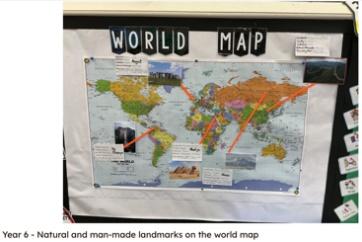
- Assist in creating or updating classroom and corridor displays about geography topics or global celebrations (e.g., World Oceans Day, Fairtrade Fortnight).
- Suggest books, maps, websites, or resources that pupils have enjoyed or found useful.
Celebrate Geographical Achievements:
- Recognise and celebrate achievements in geography (e.g., “Geographer of the term,”).
- Help promote awareness of different cultures, environments, and the importance of looking after our planet.
Model Good Learning Habits:
- Show curiosity, enthusiasm, and good observation skills in geography lessons.
- Set a positive example by completing work carefully, showing respect for different places and cultures, and caring for the environment.
What Makes a Good Geography Ambassador?
- A strong interest in the world around us - places, people and environments.
- Curious about how earth works and how we can protect it.
- Responsible, reliable, and organised.
- Willing to take part in events, clubs, and extra tasks.
- Enjoys helping others and working in a team.
Meet Our Geography Ambassadors
.jpeg)
Aaliyah
Year 4
I’ve really enjoyed learning about mountains.
I want to help other children to learn to love geography too.
.jpeg)
Wasay
Year 4
I have enjoyed learning about rivers and valleys in geography.
I want to be geography ambassador because I find it very interesting and l like it.
.jpeg)
Amna
Year 5
When I learned about rivers in year 4 and the water cycle, it was something I never knew and I found it so interesting.
I want to tell other children facts about geography that they didn’t know before.
.jpeg)
Taha
Year 5
I like learning about flags and countries around the world. I also enjoy fieldwork - using compasses and maps!
I wanted to be a geography ambassador because I really like geography.
Geography Curriculum, Teaching & Learning and Assessment Outcomes
Curriculum
The intent of our Geography curriculum is to inspire curiosity about the world around us and to encourage a lifelong interest in exploring places, people, and environments. We aim to provide a rich, engaging, and progressive geography programme that enables all pupils to:
- Develop knowledge of locations, places, and environments, starting locally and gradually widening to national and global scales.
- Understand human and physical geography, including landscapes, weather, settlements, resources, and environmental issues.
- Appreciate cultural, social, and environmental diversity, fostering respect and understanding for different communities and ways of life.
- Build skills to ask questions, gather information, observe, investigate, and interpret geographical data.
- Make connections between physical and human processes, and understand how people can influence and care for the environment.
In Early Years the focus is on exploring immediate surroundings, local places, and familiar environments through observation, play, simple maps, and discussions. Pupils begin to develop vocabulary for describing places, weather, and natural features, and are encouraged to notice changes in their environment.
Teaching & Learning
To achieve our intent, we implement a dynamic and engaging Geography curriculum that is well-structured and sequentially designed. Key elements include:
-
Curriculum Design
We have developed a clear progression framework that builds on prior knowledge, ensuring that pupils develop a robust understanding of geography from Early Years through to Year 6. Topics are carefully selected to cover a range of themes, including local and global places, physical and human geography, environmental issues, and geographical skills.
In Early Years, children engage with geographical concepts through play, discussions about their immediate environment, exploration of nature, and map-based activities, paving the way for learning in later years.
-
Teaching Strategies
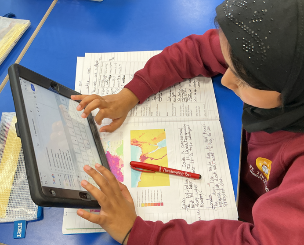
Teaching is characterised by a range of interactive strategies, including map work, role-play, storytelling, field observations, debates, and discussions, which enhance pupils’ engagement and make learning memorable.
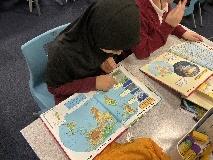
We emphasise the use of primary and secondary geographical sources, teaching pupils how to observe, record, analyse, and evaluate information about places, environments, and people.
-
Experiential Learning
Field trips and visits to local areas, nature reserves, rivers, coastal sites, or speakers from the community are integral to our geography curriculum, providing pupils with tangible connections to their learning.
Projects and learning activities are designed to encourage creativity, such as making models of landscapes, presentations, maps, and collaborative group work.
In Early Years, we organise local walks and visits that help children develop awareness of their surroundings, the environment, and how people interact with it.
-
Adaptive Teaching
We employ adaptive teaching strategies to meet the diverse needs of all learners, ensuring that pupils of different abilities can access the curriculum effectively.
Lessons are differentiated through varied resources, grouping strategies, and tailored questioning, allowing all pupils to engage with geographical concepts at their level.
-
Assessment and Feedback
Formative assessments are regularly conducted to monitor pupils’ understanding and engagement. Feedback is constructive and timely, aimed at encouraging reflection and self-improvement. Opportunities for review learning are embedded to help pupils revisit and consolidate key concepts over time.
Assessments track progress against the national curriculum expectations, allowing for tailored support as necessary.
Assessment Outcomes
The impact of our geography curriculum is measured through various outcomes and indicators:
-
Pupil Engagement and Enthusiasm
Observations show high levels of engagement and enthusiasm amongst pupils during geography lessons. Many express enjoyment and a keen interest in asking questions, exploring their surroundings, and making connections to their own lives and local environment.
-
Knowledge Retention and Understanding
Assessment data indicates that pupils consistently achieve age-related expectations in geography. They demonstrate a strong understanding of physical and human geography and can articulate their knowledge clearly, often making links to prior learning and real-world contexts.
-
Skills Development:
Pupils leave St Thomas’ with well-developed geographical skills, including map reading, data collection and analysis, critical thinking, and the ability to explain processes and patterns in the natural and human environment. This foundation prepares them well for secondary education and beyond.
In Early Years, children exhibit an emerging understanding of geography through participation in discussions and activities related to their immediate surroundings, the local community, and natural environments.
-
Cultural Awareness and Environmental Responsibility
Through their learning, pupils develop a greater understanding of their place in the world, an appreciation for cultural and environmental diversity, and a sense of responsibility for the planet. This supports the promotion of British Values, particularly mutual respect and understanding of different communities.
-
Community Involvement
The curriculum fosters connections with the local community, as seen through joint projects, local walks, field trips, and community events. These experiences enhance the relevance of geography in the pupils’ lives and strengthen their connection to the local environment and wider world.
In summary, our intent, implementation, and impact statements reflect our commitment to delivering an outstanding Geography curriculum that not only meets the educational standards set by Ofsted but also nurtures informed, environmentally aware, and socially responsible citizens prepared to engage thoughtfully with the world around them.
Overview of Geography

Geography in the Early Years
In the Early Years Foundation Stage (EYFS), geography is explored through the Understanding the World area of learning. Children develop early geographical understanding through hands-on experiences, stories, discussions, and exploration of their local environment and the wider world.
Children begin by learning about their community and where they belong. They talk about their homes, families, and places they go, such as shops, schools, and places of worship. They learn who helps us in the community, like doctors, firefighters, and postal workers, and how places serve different purposes. These early experiences build a sense of place and identity.
Exploring parks and trees helps children learn about nature and local green spaces. Through walks, collecting leaves, or observing seasonal changes, they notice patterns in the environment and understand how natural spaces are used. They recognise features such as grass, paths, benches, and trees, and begin using simple directional language.
Learning about the beach and places like Blackpool introduces children to different environments beyond their local area. They explore features like sand, sea, piers, and seaside rides, comparing them to where they live.
Children are introduced to basic features of England and Great Britain, such as capital cities and landmarks like Buckingham Palace, and national symbols like the Union Jack. Through maps, stories, and images, they begin to understand they live in a country that is part of a wider world.
Exploring countries such as France, Spain, and Italy help children begin to understand different cultures and places beyond the UK. They may learn simple words in other languages, taste foods, or hear music from those countries. This develops their awareness of how people live differently elsewhere.
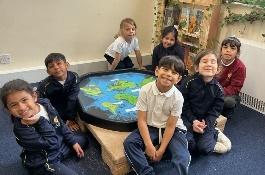
Throughout these experiences, children develop early geographical skills such as recognising features, making comparisons, using simple maps or globes, and asking questions. Small world play, continuous provision activities, and role play areas allow children to explore environments and places in imaginative, meaningful ways. Practitioner’s support this through storytelling, conversation, exploration, and play, laying strong foundations for geographical understanding.
Achievements & Celebrations in Geography
.png)