The Ethos Team
The Ethos team act as a role models and representative for their subject. Their role is to help promote the school’s values across the school, plan and deliver worship, and give pupils a voice over issues that they are passionate about.
Role Description - Main Responsibilities
-
Live Out Our Values:
We try our best to show our school values (like love, respect, honesty, kindness) and encourage others to do the same.
-
Help with Worship:
We help plan and sometimes lead assemblies or collective worship. We might read a prayer, act out a story, or choose music or themes.
-
Welcome and Include Everyone:
We help make sure everyone feels they belong in our school - whatever they believe or where they come from.
-
Celebrate Special Events:
We help the school celebrate important times like Christmas, Easter, Harvest, or other special days.
-
Care for Others:
We help with charity work, fundraising, and thinking about how we can help people in our community and around the world.
-
Look After Our Environment:
We help keep the school a calm, happy and caring place - in how we act, speak, and look after each other and our spaces.
-
Be Role Models:
We set a good example for others by showing our values in our actions, behaviour, and words.
What Skills Do I Need?
- Be kind and respectful to others
- Listen carefully and share your ideas
- Set a good example in and out of class
- Be confident to speak in front of others (but it’s okay to feel nervous!)
- Be ready to learn about different beliefs and ways of life
Meet Our Ethos Team
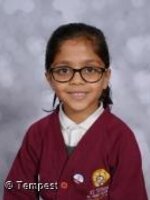
Aaminah
Year 3
I wanted to be on the Ethos team because I enjoy team work.
I was looking forward to working with Miss Berry.
.jpeg)
Umar
Year 3
I wanted to be on the Ethos team because I am really helpful.
My brother was on the Ethos team and he loved it.
.jpeg)
Saad
Year 3/4
I wanted to be on the Ethos team so that I could find out more about RE and worship.
I want to help other children to follow our school values.
.jpeg)
Tillie-Rae
Year 3/4
I wanted to be on the Ethos team so I could help people be respectful and kind.
I also wanted to develop my leadership skills.
.jpeg)
Ahmed
Year 4
I wanted to be on the Ethos team because I enjoy speaking in front of others and I know the Ethos team lead worship.
I wanted to show others about our school values.
.jpeg)
Aisha
Year 5
I wanted to be on the Ethos team because I thought it would be fun.
I wanted to meet other people and help to lead worship.
.jpeg)
Sabaa
Year 5/6
I wanted to be on the Ethos team as I knew it would boost my confidence on stage.
I wanted to make sure people always show respect for different religions.
.jpeg)
Bella
Year 6
I wanted to be on the Ethos team so I could be a good representative for the school.
The Ethos team is one of the most important jobs in school.
.jpeg)
Ryan
Year 6
I wanted to be on the Ethos team because I want to be a good leader.
I was also interested in leading worship.
RE Curriculum, Teaching & Learning and Assessment Outcomes
Curriculum
Our Vision: “Let your light shine” - Matthew 5:16
At St Thomas’ Religious Education is a vital part of our curriculum and plays a key role in fulfilling our Christian vision: “Let your light shine.” We believe every child is uniquely created and loved by God, and our RE curriculum supports children to grow in wisdom, understanding, and compassion, encouraging them to use their gifts to make a positive difference in the world.
Through the study of Christianity and other world faiths and worldviews, pupils are guided to explore deep questions about belief, identity, meaning, and purpose. They learn to reflect on their own ideas and those of others, developing respect, empathy, and the ability to live well in a diverse and ever-changing world.
We follow the Manchester Diocese RE Syllabus, which provides a rich, balanced, and enquiry-based curriculum. It enables children to:
- Develop a strong understanding of Christianity, its core beliefs, and how it shapes the lives of individuals and communities;
- Encounter and engage with other major world religions and non-religious worldviews, fostering tolerance and appreciation of diversity;
- Think theologically and philosophically, ask meaningful questions, and make connections between belief and action;
- Grow in spiritual awareness and moral responsibility, reflecting on how they can contribute to a just and compassionate society.
Our RE curriculum is also shaped by our school values, which underpin all aspects of school life. These values guide our teaching and relationships, and they help children grow into thoughtful, principled individuals who shine their light in the way they treat others, approach learning, and engage with the wider world.
RE at St Thomas’ is not just about learning facts, it is about forming character, encouraging dialogue, and inspiring children to live with purpose, integrity, through Gods love.
We acknowledge the legal requirement stated in the 1988 Education Reform Act 6 (1) and 9 (3), which states the need for each child to attend a daily act of worship either as a whole school, class or group. Parents/Carers have the legal right to withdraw their children from the act of worship either partially or wholly, and also the right to withdraw their child from all or part of RE as a subject in the curriculum. Any parents/carers wishing to do so should contact the Headteacher. Teachers also have the right to withdraw from leading and taking part in worship.
Teaching & Learning
At St Thomas’, our Religious Education curriculum is carefully and purposefully implemented in line with the Manchester Diocese Syllabus, ensuring a broad, balanced, and engaging programme of study that promotes both academic and personal development.
We deliver RE through a carefully planned two-year rolling programme, which ensures full coverage of the Diocese’s curriculum across mixed-age classes. This approach allows for progression in knowledge and skills, while avoiding repetition and ensuring all pupils access the full breadth of content during their time at school. Planning is mapped to ensure that key theological concepts are revisited in greater depth as children move through the school.
RE is taught in weekly dedicated lessons, delivered by class teachers who plan using the Manchester Diocese resources and progression frameworks. Each unit of learning is structured around an enquiry-based approach, encouraging pupils to investigate, question, and reflect on key religious and philosophical ideas. Learning is supported by high-quality texts, visual resources, artefacts, and opportunities for discussion and creative response.
In addition to weekly RE lessons, we provide enrichment opportunities throughout the year to deepen learning and bring faith to life. These include:
- Educational visits to places of worship representing different faiths (e.g. churches, mosques, synagogues, temples),
- Visitors and faith representatives who share personal experiences and insights,
- Opportunities for cross-curricular links with subjects such as history, art, and PSHE,
- Thematic RE or Faith Weeks, linked to values, world faiths, or global justice issues.
Our RE curriculum is also embedded within our whole-school values education, which is woven through daily life, collective worship, and wider curriculum activities. These values are regularly referenced within RE lessons, helping pupils to make meaningful connections between what is taught, how they live, and who they are becoming.
Teachers ensure that all children, regardless of background or ability, can engage with the curriculum through inclusive, accessible teaching strategies. Lessons are designed to be interactive and reflective, giving space for children to explore their own ideas and those of others with curiosity and respect.
Through consistent implementation, we aim to ensure that children leave [School Name] with a secure understanding of Christianity and other worldviews, a respect for diversity, and the ability to think deeply, live with integrity, and ‘let their light shine’.
Assessment Outcomes
Our Religious Education (RE) curriculum has a transformative impact on pupils’ lives, shaping their knowledge of Christianity and other world faiths while nurturing personal development, spirituality, and moral awareness. Rooted in the values of the Manchester Diocese and the Church of England’s Vision for Education, our RE provision enables all children to flourish as thoughtful, compassionate, and respectful individuals.
The strength and effectiveness of our RE curriculum were clearly recognised in our recent SIAMS inspection, where we were proud to receive an Exceptional report. The report celebrated the deeply embedded Christian vision that drives our curriculum and acknowledged RE as a central pillar in our school’s Christian character. Inspectors highlighted many strengths in the report including the following:
- The Christian vision is promoted and celebrated relentlessly in this school. It has a clear impact on the confidence, behaviour and achievements of pupils.
- The broad, rich curriculum is bespoke to the context and needs of pupils. High quality support and guidance are available to pupils who experience barriers to learning.
- Parents say the result is transformational as they see their children progress and flourish.
- Collective worship has been highly developed through a mutually beneficial partnership with the local church community. It has a profound effect on spiritual development and pupils lead worship with confidence and pride.
- The Christian vision and underlying values, have a significant impact on the quality of relationships in school. These are lived out on a daily basis.
- This is witnessed in the caring manner pupils relate to each other and to those in need.
- Effective leadership of religious education (RE) and the productive partnership with the diocese, ensure staff competently deliver a well-structured curriculum. This gives pupils a good understanding of Christianity and a range of world religions.
Pupils leave our school with a secure understanding of Christian beliefs and practices, an appreciation of other worldviews, and the ability to engage with religious and philosophical questions in a meaningful way. They demonstrate empathy, curiosity, and a strong sense of social justice, rooted in the rich RE experiences they receive. Our curriculum not only deepens pupils' spiritual understanding but also empowers them to become courageous advocates in their community and beyond.
The exceptional impact of our RE curriculum reflects our commitment to an education that is academically rigorous, spiritually enriching, and inclusive. It is a key driver in preparing children to live well together in a diverse world, underpinned by the love, hope, and wisdom of our Christian foundation.
Overview of RE
.png)
Progression of Skills in RE
| Strand | EYFS | KS1 | LKS2 | UKS2 |
|---|---|---|---|---|
| Knowledge & Understanding | Recognise religious stories, people, and symbols. | Retell key religious stories; name beliefs, festivals, and practices. | Describe and explain a range of religious beliefs, symbols, and practices. | Analyse beliefs and practices from Christianity and other worldviews with depth and accuracy. |
| Beliefs & Teachings | Begin to talk about what they believe and what others believe. | Identify what people believe and how this affects their lives. | Make links between beliefs and actions; explore similarities and differences. | Evaluate how beliefs influence lives and the world; explore diversity within beliefs. |
| Worship & Celebration | Explore simple celebrations (e.g. birthdays, Christmas, Diwali). | Recognise how and why people celebrate religious festivals and worship. | Describe the meaning behind religious rituals and ceremonies. | Explain the impact of religious celebration and worship on individuals and communities. |
| Values & Morality | Talk about what is right or wrong in simple situations. | Identify how beliefs affect moral choices and behaviour. | Make connections between beliefs and values; discuss consequences of actions. | Critically reflect on moral issues, considering religious and non-religious perspectives. |
| Reflection & Spirituality | Share feelings and experiences; begin to talk about big questions. | Ask and respond to "big questions" about life and beliefs. | Reflect on their own ideas and the beliefs of others with increasing understanding. | Express, justify, and evaluate personal responses to questions of meaning, truth, and purpose. |
| Respect & Diversity | Show curiosity about others’ beliefs and celebrations. | Talk about and respect differences and similarities between faiths. | Understand and describe a range of worldviews respectfully. | Show empathy and understanding of complex and diverse religious and non-religious perspectives. |
| Enquiry & Communication | Ask simple questions and express ideas through play and discussion. | Ask and answer questions about religion using simple terms. | Ask deeper questions; communicate ideas with relevant vocabulary. | Use a wide religious vocabulary to ask insightful questions and lead respectful dialogue. |
RE in the Early Years
In the Early Years Foundation Stage (EYFS), Religious Education (RE) is explored through the Understanding the World area of learning, especially within People, Culture and Communities. RE nurtures curiosity and helps children explore big questions about life, beliefs, and the world around them.
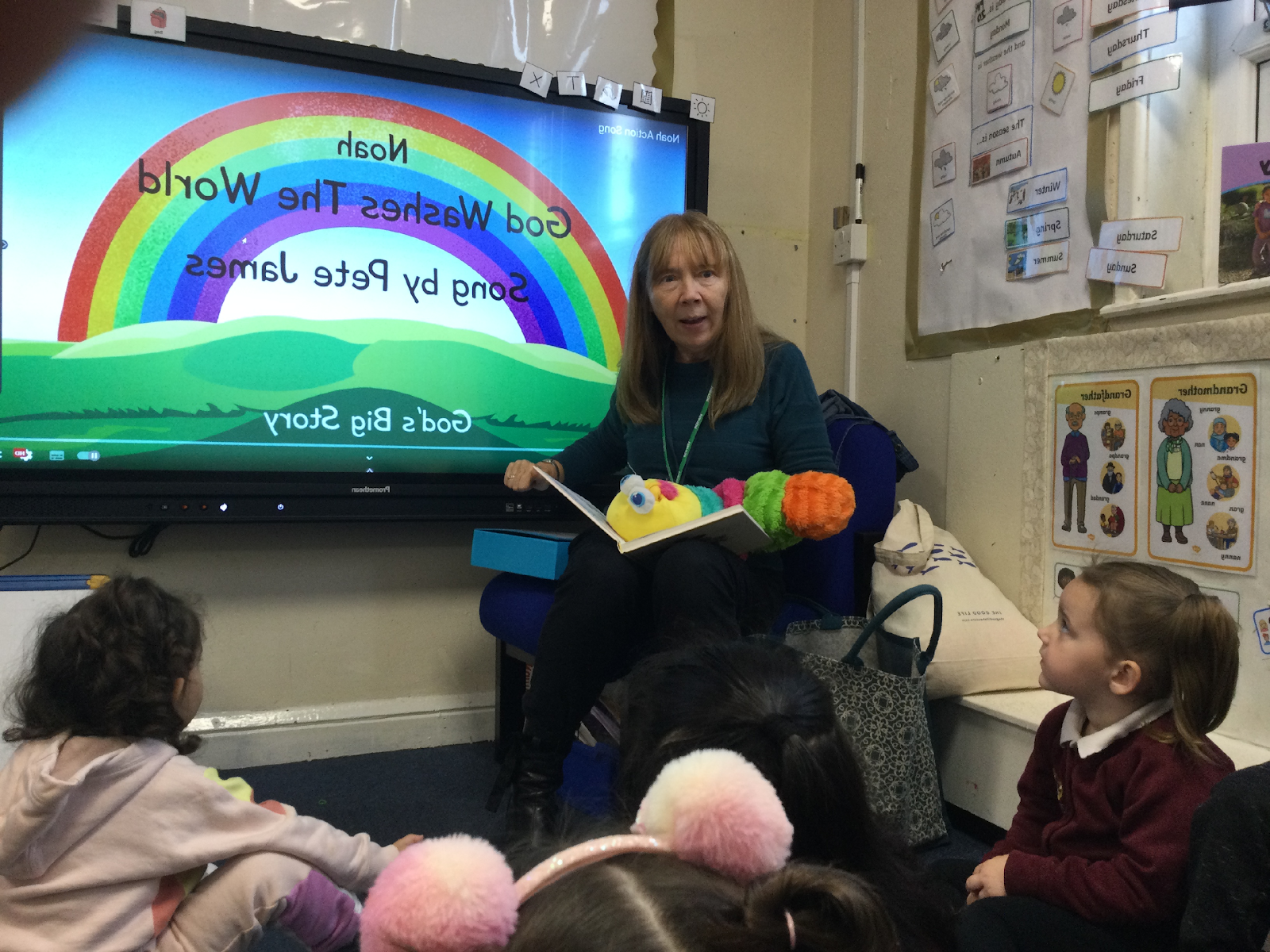
Children learn through stories, songs, celebrations, and play. Wiggle Worship offers a joyful way to explore Christian values through music, movement, storytelling, and prayer. These experiences introduce simple themes like kindness, love, and thankfulness, helping children connect with faith in a positive, age-appropriate way.
They begin to explore belonging, reflecting on their place in family, school, and community. Children talk about how people show they belong - through routines, clothing, or ceremonies - and learn that everyone is special in their own way.
Through stories Jesus told, such as The Good Samaritan, and stories he heard, like Noah’s Ark, children explore values like compassion, forgiveness, and trust. These stories show how faith traditions use storytelling to share beliefs and morals.
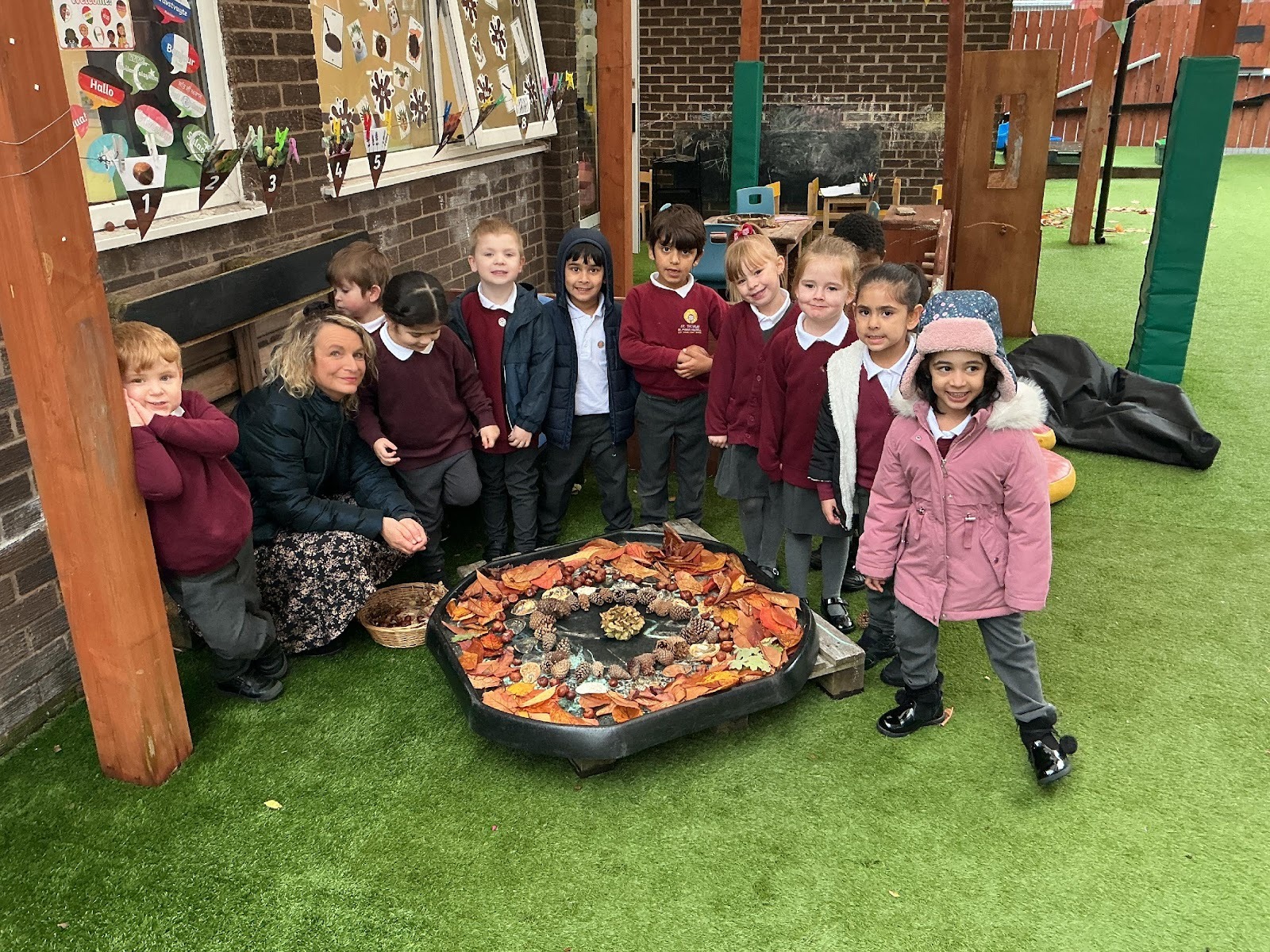
Children take part in learning about festivals and celebrations from Christianity and other world faiths, including Christmas, Easter, Diwali and Eid. Through crafts, music, food, and role play, they begin to understand that people around the world live, believe, and celebrate in different ways, and that these differences should be respected and valued.
An early introduction to God and prayer is woven through simple reflections and quiet thinking times. Children are encouraged to ask questions like “Who made the world?” or “Why do people pray?” learning that many people believe in God and show it in different ways.
Throughout these experiences, children develop awareness that people are different and that beliefs, traditions, and ways of life vary between families and cultures. RE in the EYFS fosters curiosity, respect, and understanding, laying the foundations for a positive view of faith, identity, and community.
Achievements & Celebrations in RE
.jpeg)
.jpeg)
.jpg)
.jpeg)
.jpeg)
.jpg)
.jpeg)
.png)