History Ambassadors
A History Ambassador acts as a pupil representative and champion for their subject. Their role is to help promote enthusiasm for history across the school, support staff in developing historical learning, and give pupils a voice in shaping how history is taught.
Role Description - Main Responsibilities
Promote a Love for History:
- Encourage other pupils to take an interest in history.
- Share interesting facts, books, or historical events in assemblies, newsletters, or on display boards.
Support Learning Across the School:
- Help teachers with history-themed events, such as History Week, Remembrance Day, or themed dress-up days (e.g., Tudor Day).
- Take part in leading or assisting with school trips to museums or heritage sites.
Assist with History Clubs:
- Support teachers in running history or heritage clubs by helping set up resources, encouraging pupil participation, and suggesting engaging topics or activities.
- Help promote the club to other pupils and gather feedback on what they enjoy or want to learn more about.
Represent Pupil Voice:
- Gather feedback from classmates about what they enjoy in history lessons and what could be improved.
- Attend regular meetings with the history subject lead or school council to share ideas and feedback.
Help with Displays and Resources:
- Assist in creating or updating classroom and corridor displays about historical topics or celebrations (e.g., Black History Month).
- Suggest books, websites, or resources that pupils have enjoyed or found useful.
Celebrate Historical Achievements:
- Recognise and celebrate achievements in history learning (e.g., star historian of the week).
- Help promote diversity in history by highlighting different cultures, viewpoints, and historical figures.
Model Good Learning Habits:
- Demonstrate curiosity, enthusiasm, and critical thinking during history lessons.
- Set a good example by completing work to a high standard and showing a respectful attitude to different historical perspectives.
What Makes a Good History Ambassador?
- A strong interest in the past and how it affects the present.
- Confident speaker and good listener.
- Responsible, reliable, and organised.
- Willing to take part in events, clubs, and extra tasks.
Meet Our History Ambassadors
.jpeg)
Aisha
Year 4
I wanted to be a History ambassador because I enjoy history lessons and I want to help other people to learn about the past. My favourite lessons so far have been about the Stone Age.
.png)
Adam
Year 4
.png)
Aisha
Year 5
I want to be a history ambassador because I love history and all the facts. It is very interesting. History is my favourite subject and I love it a lot.
.png)
M-Danyaal
Year 5
I wanted to be a history ambassador because I am interested in the British monarch and how it evolved.
History Curriculum, Teaching & Learning and Assessment Outcomes
Curriculum
The intent of our History curriculum is to ignite pupils’ curiosity about the past and to inspire a lifelong passion for historical inquiry. We aim to provide a rich, engaging, and coherent history programme that allows children to:
- Develop a chronological understanding of significant events and periods in history.
- Cultivate a sense of identity and heritage through studying local, national, and global histories.
- Foster critical thinking skills by encouraging pupils to question sources, consider different perspectives, and understand the complexity of historical narratives.
- Promote the skills necessary to retrieve, evaluate, and apply historical evidence effectively, making connections across different time periods and contexts.
In Early Years, our intent is to introduce foundational concepts of history through play-based learning. We encourage children to explore their past experiences, family histories, and significant events within their community through storytelling, role-play, and guided discussions. This lays the groundwork for more formal historical inquiry in later years.
Teaching & Learning
To achieve our intent, we implement a dynamic and engaging History curriculum that is well-structured and sequentially designed. Key elements include:
-
Curriculum Design
We have developed a clear progression framework that builds on prior knowledge, ensuring that pupils develop a robust understanding of history from Early Years through to Year 6. Projects are carefully selected to cover a range of themes, including significant British and world events, historical figures, and local history.
In Early Years, children engage with historical concepts through play, discussions about their families, and exploration of their local environment, paving the way for learning in later years.
-
Teaching Strategies
Teaching is characterised by a range of interactive strategies, including storytelling, role-play, debates, and discussions, which enhance the pupils’ engagement and make learning memorable.
We emphasise the use of primary and secondary sources, teaching pupils how to analyse and evaluate historical evidence critically.
-
Experiential Learning
Field trips and visits to historical sites, museums, or speakers from the local community are integral to our history curriculum, providing pupils with tangible connections to their learning.
Projects and learning activities are designed to encourage creativity, such as making historical artefacts, presentations, and collaborative group work.
In Early Years, we organise local history walks and community visits that give children a concrete understanding of their heritage and environment.
-
Adaptive Teaching
We employ adaptive teaching strategies to meet the diverse needs of all learners, ensuring that pupils of different abilities can access the curriculum effectively.
Lessons are differentiated through varied resources, grouping strategies, and tailored questioning, thus allowing all pupils to engage with historical concepts at their level.
-
Assessment and Feedback
Formative assessments are regularly conducted to monitor pupils’ understanding and engagement. Feedback is constructive and timely, aimed at encouraging reflection and self-improvement. Opportunities for review learning are embedded to help pupils revisit and consolidate key concepts over time.
Assessments track progress against the national curriculum expectations, allowing for tailored support as necessary.
Assessment Outcomes
The impact of our history curriculum is measured through various outcomes and indicators:
-
Pupil Engagement and Enthusiasm
Observations show high levels of engagement and enthusiasm amongst pupils during history lessons. Many express enjoyment and a keen interest in asking questions and making connections to their own lives.
-
Knowledge Retention and Understanding
Assessment data indicates that pupils consistently achieve age-related expectations in history. They demonstrate a strong chronological understanding and can articulate their knowledge clearly, often making links to prior learning.
-
Skills Development
Pupils leave St Thomas’ with well-developed historical skills, including critical thinking, analysis, and the ability to construct coherent narratives based on evidence. This foundation prepares them well for secondary education and beyond.
In Early Years, children exhibit an emerging understanding of their history through participation in discussions and activities related to their family and community.
-
Cultural Awareness and Identity
Through their learning, pupils develop a greater understanding of their place in the world and an appreciation for cultural diversity, leading to increased respect and empathy for different perspectives. This supports the promotion of British Values, particularly mutual respect and tolerance of those with different faiths and beliefs.
-
Community Involvement
The curriculum fosters connections with the local community, as seen through joint projects and community events, which enhance the relevance of history in the pupils’ lives and strengthen community ties.
In summary, our intent, implementation, and impact statements reflect our commitment to delivering an outstanding History curriculum that not only meets the educational standards set by Ofsted but also nurtures informed, conscientious citizens prepared to engage thoughtfully with the past and its influence on the present and future.
Overview of History

History in the Early Years
In the Early Years Foundation Stage (EYFS), history is not taught as a separate subject but is part of the Understanding the World area of learning.
Children develop a sense of the past and present by exploring personal experiences, family history, and familiar events and celebrations. History in EYFS helps children make sense of time, change, and how things used to be.
Children learn about change over time by exploring how they have grown. They look at baby photos, talk about what they can do now, and compare themselves to others. This helps them understand that people grow and that there was a time before they were born.
Exploring transport from the past allows children to compare old and new vehicles, noticing how travel has changed. Role play and images of early cars, trains, or boats help build vocabulary like "past," "old," and "new."
Old and new toys help children notice differences in materials, design, and how toys work. They begin to understand that everyday life changes and that people in the past had different experiences.
Children also explore dinosaurs, which helps them understand the idea of a time long before humans. Through fossils, stories, and role play, they begin to grasp the concept of ancient history and that the world has changed over millions of years.
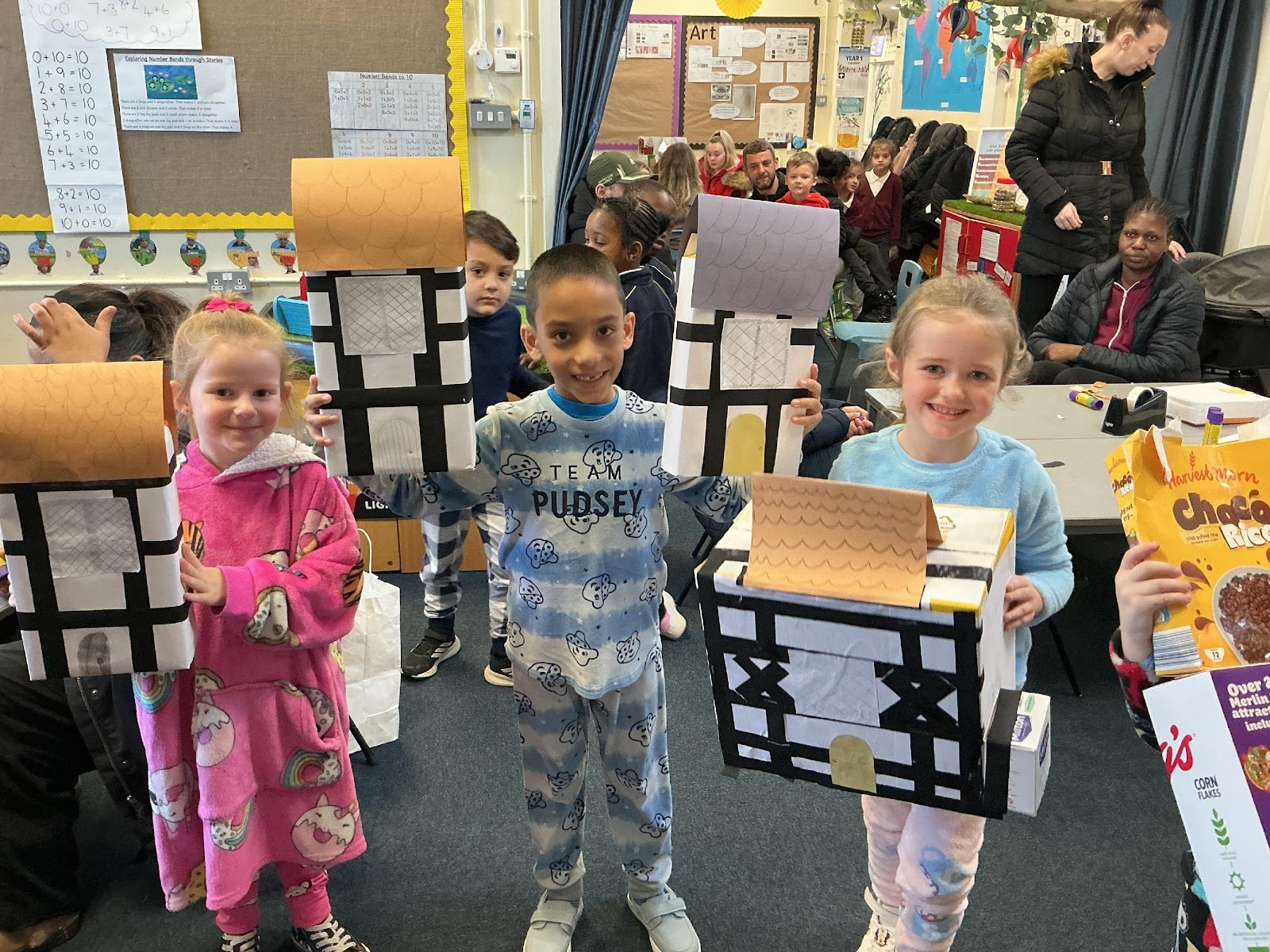
Festivals offer further opportunities to explore the past. Learning about Guy Fawkes introduces a significant historical event. Children hear the story in an age-appropriate way and explore how we remember it through Bonfire Night, with firework art or re-enactments.
Throughout these experiences, children develop early historical thinking by sequencing events, noticing change, using time-related language (“a long time ago,” “before,” “now”), and asking questions. Practitioners support this through storytelling, discussion, and imaginative play, laying the foundation for historical understanding in a meaningful and age-appropriate way.
Achievements & Celebrations in History
.jpeg)
.png)