Reading Ambassadors
A Reading Ambassador is a pupil representative who helps encourage a love of books and reading in school. They support reading activities, help others find books they enjoy, and make reading fun for everyone!
Role Description - Main Responsibilities
Promote a Love of Reading:
- Encourage classmates to read for fun and explore different types of books.
- Recommend favourite books in assemblies, newsletters, or display boards.
- Share reading quotes or fun facts about authors and stories.
Support Reading Across the School:
- Help with events like World Book Day, Reading Picnics, or author visits.
- Assist in organising dress-up days or book-themed competitions.
- Read aloud to younger pupils or lead story-time sessions.
Assist with Reading Clubs:
- Help teachers run lunchtime or after-school reading/book clubs.
- Suggest exciting themes or books for the group to explore.
- Encourage more pupils to join and take part.
Represent Pupil Voice:
- Ask classmates what kinds of books they enjoy or would like in the library.
- Share reading feedback or ideas with the English subject lead or school council.
Help with Displays and the School Library:
- Assist in creating reading displays in classrooms or corridors.
- Help keep the reading areas tidy and welcoming.
- Recommend books for the library or create “Top Picks” and themed booklists.
Celebrate Reading Achievements:
- Help recognise pupils who show great effort or progress in reading.
- Celebrate different authors, genres, and stories from around the world.
Model Good Reading Habits:
- Be a reading role model by reading regularly and widely.
- Show enthusiasm, curiosity, and kindness when talking about books with others.
What Makes a Good Reading Ambassador?
- Loves reading and enjoys discovering new books and authors.
- Is confident speaking in front of others and is a great listener.
- Is helpful, dependable, and well-organised.
- Enjoys taking part in reading events and helping others.
- Works well in a team and shows a positive attitude.
Meet Our Reading Ambassadors
.png)
.png)
Aaliya
Year 6
I wanted to be a reading ambassador because I love to read; I regularly go the library to borrow books and I read lots at home. Reading is very special to me as books can take you out of reality and allow me a calm, chilled break, especially when I am feeling stressed. Moreover, I wanted to take on this role because I am confident promoting reading to other. I not only want to continue enjoying reading myself at St Thomas’, but also want to help others enjoy books too.
In my opinion, books help people: whether they’re going through something or need assistance. Furthermore, I believe that when we read lots of books as children, it helps us to perform better in our lessons and will support us with future success.
.png)
Isla Rose
Year 6
As a Reading Ambassador, my role is to encourage other children to enjoy reading and feel confident choosing books that are right for them. I help show that reading can be fun, relaxing and exciting, not just something we do in lessons. I enjoy talking to younger children about their favourite stories and helping them find books they will enjoy. One of my responsibilities is to be a good role model by reading regularly and sharing what I am reading with others. I also help with reading events in school, such as assemblies, library sessions and reading challenges. I like supporting children who find reading difficult by reminding them that everyone improves at their own pace.
.png)
Maliha
Year 5
I enjoy being a reading ambassador because I genuinely enjoy reading books, both to myself and to others. As a reading ambassador, I enjoy our meetings and creating resources such as bookmarks to give out as prizes to promote reading in school. We get to help out in assemblies when the Reading Plus champions are announced too. In our school, we have lots of books to choose from: fiction, non-fiction, romance, science and many more. I also like the app that we use - Reading Plus - because there is not only reading on there but also activities that help us develop our vocabulary.
Reading Curriculum, Teaching & Learning and Assessment Outcomes
Curriculum
The intent of our Reading curriculum is to foster a deep love of reading and to inspire a lifelong appreciation of literature. We aim to provide a rich, inclusive, and engaging reading programme that enables children to:
- Become fluent, confident readers with strong comprehension skills.
- Develop a love for books by exploring a wide range of genres, authors, and cultures.
- Build critical thinking through discussion, questioning, and responding to texts thoughtfully.
- Apply reading skills across the curriculum, using texts to gather information, make connections, and develop understanding of the wider world.
We believe that reading is the key to unlocking learning in all subjects and to promoting well-rounded, empathetic individuals. Our approach combines high-quality texts, systematic phonics, and meaningful reading experiences to ensure every child becomes a capable and motivated reader.
In Early Years, our intent is to nurture a passion for stories and language from the very beginning. Children explore books through storytelling, songs, and role-play, developing early language, listening, and comprehension skills. Phonics is taught systematically, while reading is embedded into daily routines, laying the essential foundations for fluent, confident reading in later years.
Teaching & Learning
To achieve our intent, we implement a structured and engaging Reading curriculum that builds progressively across the key stages. The curriculum is inclusive, high-quality, and designed to develop confident, fluent readers who enjoy reading for both pleasure and purpose.
Curriculum Design
We have developed a clear progression framework that systematically builds reading skills from Early Years to Year 6. It includes daily phonics teaching, comprehension development, vocabulary enrichment, and exposure to diverse, high-quality texts, including fiction, non-fiction, poetry, and traditional tales. In Early Years, children begin reading through phonics, storytelling, and shared reading. They enjoy rhyme, rhythm, and repetition, laying the foundation for confident decoding and comprehension later.
Teaching Strategies
Reading is taught using whole-class, group, and one-to-one sessions. Teachers model fluent, expressive reading, helping pupils develop their own fluency and understanding. We select texts to reflect diversity and promote inclusion, enabling pupils to see themselves and others in what they read. Teaching includes explicit instruction in comprehension strategies, vocabulary, and opportunities for discussion and critical thinking.
Experiential Learning
We enrich the curriculum with events such as World Book Day, author visits, book fairs, and competitions.
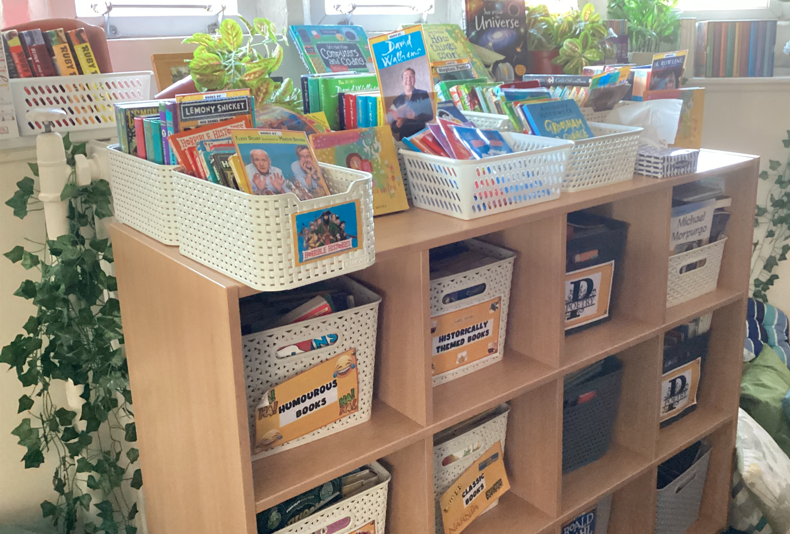
Book corners, libraries, and reading displays promote a strong reading culture. In Early Years, reading is embedded in daily routines and role-play, helping children engage with language in playful contexts.
Adaptive Teaching
We use adaptive strategies to meet all learners’ needs. Lessons are differentiated by text choice, questioning, grouping, and support. Our inclusive approach ensures pupils with SEND, EAL, or other needs are supported to access and succeed in reading.
Assessment and Feedback
Formative assessments regularly monitor progress and inform teaching. Feedback is constructive and timely, helping pupils reflect and improve. Progress is tracked against national expectations, with interventions where needed.
Assessment Outcomes
The impact of our Reading curriculum is measured through various outcomes and indicators:
-
Pupil Engagement and Enthusiasm
Observations show high levels of engagement and enthusiasm among pupils during reading lessons. Many pupils express enjoyment in exploring a range of texts and confidently discussing their favourite stories and authors.
-
Reading Fluency and Comprehension
Assessment data indicates that pupils consistently achieve age-related expectations in reading. They demonstrate strong decoding skills and comprehension, able to understand and discuss texts clearly, often making connections to their own experiences and prior learning.
-
Skills Development
Pupils leave St Thomas’ with well-developed reading skills, including decoding, inference, retrieval, and critical thinking. These skills prepare them well for future learning across all subjects.
In Early Years, children exhibit emerging reading abilities through their participation in storytelling, phonics activities, and shared book sessions.
-
Cultural Awareness and Identity
Through their reading, pupils develop a broader understanding of diverse cultures and perspectives. This encourages empathy, respect, and a positive appreciation of difference, supporting British Values such as mutual respect and tolerance of those with different backgrounds and beliefs.
-
Community Involvement
The curriculum fosters strong links with families and the local community through reading events, library visits, and author workshops. These connections enrich pupils’ reading experiences and strengthen the role of reading both at school and at home.
In summary, our intent, implementation, and impact statements demonstrate our commitment to delivering an outstanding Reading curriculum that not only meets national standards but also inspires confident, enthusiastic readers who are prepared to succeed and engage thoughtfully with the world around them.
Overview of Reading
.png)
Progression of Skills in Reading
.png)
Reading in the Early Years
In the Early Years Foundation Stage, reading is a key part of the Literacy area of learning. It is closely linked to children’s communication, language, and early writing skills. Reading in the EYFS is about developing a love of stories, books, and rhymes, as well as building the foundations for decoding and understanding text.
Children learn that print carries meaning by exploring books, signs, labels, and environmental print in meaningful contexts. They enjoy sharing stories and rhymes with adults, joining in with repeated phrases and predicting what might happen next. Through these shared experiences, children begin to understand how stories are structured and to talk about characters, settings, and events.
As children’s language and listening skills develop, they engage in conversations about what they have read or heard, expressing preferences and making connections to their own experiences. Practitioners encourage this by reading expressively, asking open-ended questions, and modelling a genuine enjoyment of books.
Early reading also involves developing phonological awareness - listening for rhymes, rhythms, and sounds in words. As children progress, they are introduced to systematic phonics to help them link sounds (phonemes) to letters (graphemes) and begin to decode simple words.
Through daily story time, rhymes, and phonics sessions, children learn to:
- Listen to and join in with familiar stories and poems
- Recognise that print conveys meaning and is read from left to right, top to bottom
- Identify and talk about favourite characters and events
- Hear and identify sounds in words
- Begin to blend sounds to read simple words
- Use new vocabulary from stories in their own speech and play
Practitioners create a language-rich environment with inviting book areas, story props, and opportunities for children to explore books independently and with others. Families are encouraged to share books at home, fostering positive attitudes to reading from the earliest age.
Through these experiences, children develop not only the skills needed to become fluent readers but also the joy, curiosity, and imagination that come from a lifelong love of reading.
Achievements & Celebrations in Reading
.png)
.jpg)
.png)
.png)
.png)
.png)
.png)
.png)
.png)
.png)
.jpg)
.png)
.png)
.png)